In California, a class action wage and hour lawsuit is when multiple employees with similar grievances sue their employer collectively.
A class action is appropriate where the employer harmed a number of workers by violating California wage/hour laws by either:
- Failing to pay overtime and/or misclassifying non-exempt employees as exempt from California overtime pay laws; or
- Engaging in misclassification of employees as independent contractors; or
- Requiring “off the clock work” and/or failing to maintain accurate timekeeping; or
- Paying less than the minimum California state wage or local minimum wage; or
- Discontinuing healthcare coverage during parental leave; or
- Failing to give employees required meal or rest breaks, or requiring them to work during their breaks; or
- Violating other provisions of the Fair Labor Standards Act (FLSA) or of state law.
- limit participation in class action litigation or
- preclude participation in class action lawsuits altogether.
In this article, our Los Angeles labor law attorneys discuss what you need to know about class action wage and hour lawsuits in California.
- 1. Benefits of Class Actions
- 2. Requirements of Class Actions
- 3. When Class Actions Make Sense
- 4. PAGA Claims vs. Class Actions
- Frequently Asked Questions
- Additional Reading
1. Benefits of Class Actions
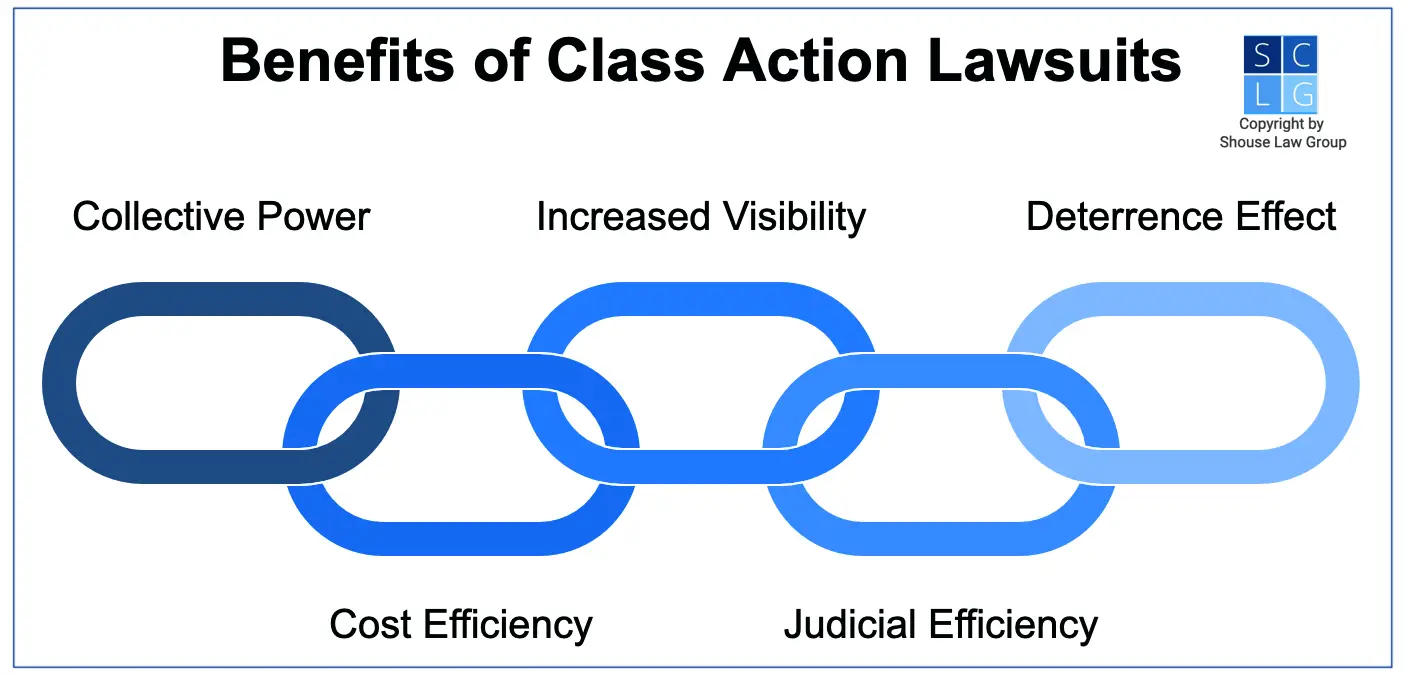
Simply put, a class action allows a California employment attorney to pool the resources of a large number of plaintiffs. This has two significant advantages.
- A class action increases the amount of time and resources an attorney can devote to the case. For wage/hour claims, the attorney’s fee is typically a percentage of the amount recovered by the employee (or former employee). With a large number of employee plaintiffs (“class members”), the total damages will be larger. This, in turn, justifies a greater investment by the attorney.
- Collective action in a wage/hour case raises the economic stakes for an employer. This means an employer may be more likely to agree to a settlement – that is, to pay the employees the unpaid wages that it owes them without the time and expense of a trial.
2. Requirements for Class Actions
A successful wage/hour class action lawsuit in California requires three things:
- An ascertainable and sufficiently numerous class of plaintiff employees;
- A well-defined community of interest; and
- Substantial benefits from a class action that make the class action preferable to other formats for the wage/hour lawsuit.1
Often, the most crucial of these three factors is the “community of interest.” The class action community of interest involves three factors:
- Predominant common questions of law or fact;
- Class representatives with claims or defenses typical of the class; and
- Class representatives who can adequately represent the class.2

3. When Class Actions Make Sense
What all this means in practice is that a class action in a California wage or hour lawsuit is probably most appropriate when:
- A large number of employees are involved in a wage/hour violation by a single employer;
- The wage and hour issue was the same or similar for all these employees;
- The circumstances surrounding the wage or hour law violation were the same or similar for all these employees; and
- Certain employees whose situation is typical of the others are willing to serve as class representatives.
For example, a wage and hour class action might be appropriate under California law if:
- An employer wrongly classified a sizable group of employees with a similar job description as exempt employees and failed to pay them overtime;
- A manager who oversaw a large group of employees required “work off the clock” from all of them; or
- A company systematically denied employees their required meal breaks at a particular work site.
4. PAGA Claims vs. Class Actions
PAGA claims are not class actions.
PAGA claims are brought by workers, on behalf of the California Attorney General, to seek monetary penalties against employers who violate labor laws. PAGA claims are not class actions but rather representative lawsuits.
Similar to class actions, the aggrieved employees bringing the PAGA lawsuit stand in for other workers who have suffered from a labor violation. Though unlike class actions, PAGA claims do not have to be certified.
In addition, if the PAGA claim is successful, the affected employees receive only 35% of any civil penalties awarded. The rest goes to the state of California.3
That said, PAGA money can accumulate quickly, as you can recover penalties for each pay period for each employee whose wage and hour rights were violated. In certain cases, PAGA claims are well worth bringing.

Frequently Asked Questions
Can my employer fire me for joining a class action lawsuit?
No. It is unlawful in California for an employer to retaliate against you for exercising your legal rights, including participating in a class action lawsuit or PAGA claim. If they fire, demote, or punish you for doing so, they may face additional legal penalties.
How do I join a wage and hour class action in California?
In most California cases, you are automatically included as a “class member” if you fit the description of the affected employees. You typically do not need to “sign up.” However, you will receive a notice in the mail giving you the option to “opt out” if you want to sue individually instead.
How long does it take to get a settlement check?
Class action lawsuits are slow processes. It often takes two to three years (or longer) from the time a lawsuit is filed until a settlement is reached and checks are mailed. PAGA claims can sometimes resolve faster, but patience is generally required.
Is my settlement money taxable?
Yes, usually. The portion of the settlement that represents “unpaid wages” is taxed like regular income (you will receive a W-2). Portions designated as “interest” or “penalties” are also taxable but usually reported on a 1099 form. Always consult a tax professional regarding your specific payout.
Additional Reading
For more in-depth information, refer to these scholarly articles:
- The Second-Class Class Action: How Courts Thwart Wage Rights by Misapplying Class Action Rules – American University Law Review.
- What’s Left to Remedy Wage Theft: How Arbitration Mandates That Bar Class Actions Impact Low-Wage Workers – Michigan State Law Review.
- Avoiding the Plague of Class Action/Representative Action Wage and Hour Suits – Labor Law Journal.
- Class Actions under Rule 23 and Collective Actions under the Fair Labor Standards Act: Preventing the Conflation of Two Distinct Tools to Enforce the Wage Laws – Georgetown Journal on Poverty Law & Policy.
- Procedural Approaches for Countering the Dual-Filed FLSA Collective Action and State-Law Wage Class Action – The Labor Lawyer.
Legal References:
- Brinker Restaurant Corp. v. Superior Court (California Supreme Court, 2012) 53 Cal.4th 1004, 1021. (“The party advocating class treatment [in a wage/hour suit] must demonstrate the existence of an ascertainable and sufficiently numerous class, a well-defined community of interest, and substantial benefits from [class certification] that render proceeding as a class superior to the alternatives…’In turn, the ‘community of interest requirement embodies three factors: (1) predominant common questions of law or fact; (2) class representatives with claims or defenses typical of the class; and (3) class representatives who can adequately represent the class.’…quoting Richmond v. Dart Industries, Inc. (1981) 29 Cal.3d 462, 470.”)
- Same. See also, for example: Dynamex Operations W. v. Superior Court (; Gonzales v. San Gabriel Transit, Inc. (; Lopez v. Randstad US, L.P. (.
- California Labor Code 2698 et seq. Assembly Bill 2288 (2024). Senate Bill 92 (2024). See also Turrieta v. Lyft, Inc. (2024) 16 Cal.5th 664.